Water Tank Cleaning Service in Ashiyana Lucknow for Safe and Fresh Water

Water looks clean only until the tank tells a different story. A glass may be clear, but the storage tank above the roof or below the ground can still hold mud, algae, insects, rust flakes, and settled dust. In a city like Lucknow, where summers are hot, dust is common, and water storage is part of daily life, tank hygiene is not a small household task.
Ashiyana has a mix of independent houses, rental floors, apartments, shops, clinics, coaching spaces, and small commercial properties. Most of them depend on overhead or underground tanks. When these tanks are not cleaned on time, the first signs are usually simple: a strange smell, dull taste, stains in buckets, or particles in stored water.
A reliable Water tank cleaning service in ashiyana Lucknow helps keep stored water fresh, safe for routine use, and free from visible dirt. The right service does more than empty the tank and splash water inside. It follows a step-by-step cleaning process that reaches corners, removes sediment, and leaves the tank ready for regular use again.

Why water tank cleaning matters in Ashiyana
Most homes treat the water source as the main concern. People check the municipal supply, borewell quality, or RO purifier. The storage tank often gets ignored because it is out of sight.
That is where the problem begins.
Over time, every water tank collects some form of residue. Even when the incoming water is good, fine particles settle at the bottom. Dust enters through loose lids. Small insects can get in through gaps. Algae may grow when sunlight reaches the tank. In underground tanks, seepage and damp surroundings can make the situation worse.
Stored water passes through this environment before reaching kitchen taps, washrooms, washing machines, and sometimes purifiers. If the tank is dirty, every outlet in the property is affected.
Regular cleaning helps with:
Better water taste and smell
Less visible dirt in buckets and taps
Lower chances of slime and algae build-up
Cleaner water for bathing, washing, and household use
Longer life for plumbing fixtures and filters
In localities like Ashiyana, LDA Colony, Bangla Bazar, Ruchi Khand, Sector M, and nearby areas, many homes use large plastic tanks on rooftops. These tanks face direct heat, dust, birds, and seasonal changes. Without a proper cover and cleaning schedule, they can become dirty faster than expected.
Common signs your water tank needs cleaning
A tank does not always look dirty from outside. The real condition becomes clear only when the lid is opened or when water quality starts changing.
Watch for these signs.
The water has an unusual smell
If tap water smells stale, earthy, or slightly rotten, the tank may have organic matter, algae, or stagnant residue inside. Sometimes the smell becomes stronger after the motor runs or when water is used after a long gap.
Fine particles appear in buckets
Brown, black, or grey particles in buckets often come from sediment at the bottom of the tank. This can happen in both overhead and underground tanks.
The tank lid is loose or broken
A damaged lid allows dust, leaves, insects, and bird droppings to enter. Even a small opening is enough for contamination.
The water leaves stains
Yellowish or brown stains on bathroom floors, buckets, or taps may point to iron content, rust, or settled dirt. Cleaning the tank may not solve mineral content in the water source, but it removes deposited sludge and visible impurities from storage.
Filters clog too often
If purifier filters, tap filters, or washing machine inlet filters need frequent cleaning, the storage tank may be sending sediment through the line.
The tank has not been cleaned for months
Even if there is no visible issue, long gaps between cleaning increase build-up. Many households wait until the water smells bad, but preventive cleaning is always better than emergency cleaning.

What a professional water tank cleaning service should include
Good tank cleaning is a process. It should not feel rushed. A trained team uses tools that can clean the tank without damaging the surface or plumbing.
Here is what a proper service usually covers.
Inspection before cleaning
The team should check the tank type, size, lid condition, inlet and outlet pipes, and level of dirt inside. This helps them choose the right method.
Common tank types include:
Tank type | Where it is usually found | Main cleaning concern |
Overhead plastic tank | Rooftops of homes and small buildings | Dust, algae, insects, heat exposure |
Underground tank | Independent houses and older properties | Sludge, seepage risk, damp surroundings |
Cement tank | Older homes and commercial spaces | Surface roughness, cracks, heavy deposits |
Loft tank | Flats and compact homes | Limited access, hidden dirt |
Draining the stored water
The tank must be emptied before deep cleaning. Some water may be collected for gardening or floor cleaning if the household wants to avoid waste. Dirty bottom water should not be used for cooking or drinking.
Scrubbing the inner surface
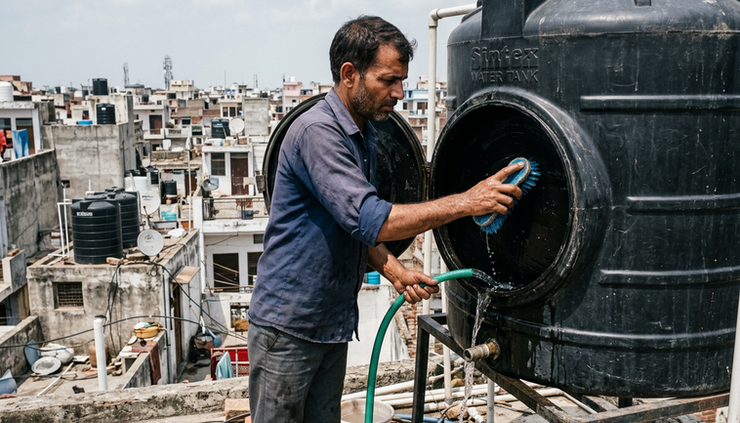
The inner walls, base, and corners need proper scrubbing. Many homeowners try to rinse the tank from outside with a pipe, but that does not remove stuck slime or settled patches. Manual or machine-assisted scrubbing helps loosen the dirt.
Sludge removal from the base
Most dirt sits at the bottom. A professional team should remove sludge, sand, and settled waste instead of just mixing it with water and draining it through the outlet pipe. If sludge enters pipelines, taps and filters may clog later.
High-pressure cleaning
Pressure washing helps remove stubborn dirt from the base and walls. It works well for plastic and cement tanks when used carefully. The pressure should be controlled so fittings do not get damaged.
Disinfection after cleaning
After physical cleaning, the tank may need safe disinfection. The purpose is to reduce germs on the inner surface. The chemical used should be suitable for water tanks, applied in the right amount, and rinsed properly before refilling.
Final rinse and check
A proper final rinse removes leftover dirt and cleaning residue. The team should also check whether the lid closes tightly and whether the outlet area is clear.
A clean tank is not only about clear water. It is about removing the dirt that has been sitting unseen for months.
How often should a water tank be cleaned
For most homes, cleaning every three to six months works well. The right gap depends on the water source, tank location, family size, and tank condition.
A practical schedule is:
Every three months
Best for underground tanks, commercial spaces, rental properties, clinics, food-related work, and homes where water quality changes often.
Every six months
Suitable for many regular households with covered overhead tanks and stable water supply.
Before summer
Heat can worsen odour and algae growth, especially in tanks exposed to sunlight.
Before or after monsoon
Rain, dampness, and dust movement can affect tanks, lids, and surrounding areas.
If the tank lid is broken, the tank is old, or the locality has frequent pipeline repair work, cleaning may be needed more often.
For families managing properties between Aminabad and Ashiyana, a fixed cleaning calendar is easier than waiting for complaints. Tenants may notice water quality issues late, and emergency cleaning can disturb daily routines.
Why DIY tank cleaning is often not enough
Many people try to clean tanks themselves, especially smaller rooftop tanks. For light rinsing, that may help. For proper cleaning, the work is harder and riskier than it looks.
The main issues are access, safety, and thoroughness.
Rooftop tanks may sit near edges, on uneven platforms, or beside wires and pipes. Underground tanks can be slippery and poorly ventilated. Entering a tank without care is unsafe. Even if the tank is accessible, scrubbing the walls and removing sludge from corners takes time and the right tools.
DIY cleaning also misses common problem areas:
The outlet point where dirt collects
Corners at the base
The underside of the lid
Pipe openings
Fine slime on inner walls
Sediment that looks like water when disturbed
A professional service saves time and reduces the chances of incomplete cleaning. It also helps when the tank is large, shared by more than one family, or connected to multiple floors.
Still, homeowners can do a few things between services:
Keep the tank lid tightly closed
Check for cracks or gaps after storms
Do not place loose bricks or dirty objects on the lid
Trim branches that drop leaves near the tank
Look inside the tank once a month with a torch
Clean nearby rooftop dust so it does not blow into the tank
These small habits reduce contamination and keep the professional cleaning effective for longer.
How to choose the right service provider
A good water tank cleaning service should be clear about its process. If the team only says “we will wash it” without explaining how, ask a few questions.
Look for these qualities.
They explain the cleaning method
The provider should be able to describe draining, scrubbing, sludge removal, pressure cleaning, disinfection, and rinsing. A clear method shows that the service is organised.
They use proper tools
Brushes, pressure pumps, suction machines, safety gear, and clean hoses make a difference. The tools should be suitable for water tanks and not used carelessly.
They respect household timing
Water tank cleaning affects daily use. The best time is often morning, after stored water has been used and before the tank is refilled fully. A reliable team should guide the household on when to switch off the motor and how much water to keep.
They handle different tank sizes
A small family tank and a large apartment tank need different planning. The team should ask about tank capacity, number of tanks, and whether the tank is overhead or underground.
They focus on cleanliness after the job
The surrounding rooftop or tank area should not be left muddy. Pipes should be reconnected properly. The lid should be placed back securely.
They do not make false promises
No genuine service can promise that all future water problems will disappear. Tank cleaning improves storage hygiene, but source water, pipes, and filters also matter. Honest advice is a good sign.
What to do before the cleaning team arrives
A little preparation makes the job faster and smoother.
Before the visit:
Use most of the stored water
This reduces draining time and water wastage.
Switch off the motor
Avoid refilling the tank just before cleaning.
Clear rooftop access
Move small items, wires, clothes stands, or stored materials near the tank.
Inform all family members
Taps may not have water during cleaning, so plan bathing, cooking, and washing in advance.
Keep a few buckets filled
Store water for urgent use while the tank is being cleaned.
Show all connected tanks
Some properties have one underground tank and multiple overhead tanks. The team should know the full system.
After cleaning, let the tank refill with fresh water. Run taps for a short time if advised, especially if the service involved disinfection and final flushing.

Good tank hygiene supports daily comfort
Clean water storage affects more than drinking water. It changes everyday comfort at home.
A cleaner tank means better water for bathing, brushing, washing vegetables, mopping floors, doing laundry, and filling coolers. It can also reduce unpleasant smells in bathrooms and kitchens. For homes that use water purifiers, cleaner storage water can help reduce visible dirt before water reaches the filter.
Commercial spaces need the same care. Small eateries, salons, hostels, clinics, tuition centres, and shops cannot afford dirty or smelly water. Even if drinking water comes from jars or purifiers, stored water still supports cleaning, washrooms, and staff use.
In older areas of Lucknow, properties may have mixed plumbing, old tanks, and shared water systems. In newer planned areas like Ashiyana, tanks are often larger and placed on rooftops with heavy sun exposure. Both situations need routine cleaning, just for different reasons.
Safe water starts with the tank
Water tank cleaning is one of those jobs that becomes visible only when ignored. A clean tank quietly supports the whole household. A dirty one slowly affects every tap.
For Ashiyana homes and nearby Lucknow properties, the smart approach is simple: keep the lid secure, inspect the tank often, and book professional cleaning on a regular schedule. Do it before the smell, stains, or particles appear. Fresh water begins where it is stored.

Comments