Professional Water Tank Cleaning Service in Rajajipuram by Rays Deep Cleaning

A water tank can look clean from the outside and still carry layers of sludge, algae, rust particles, insects, and fine dust inside. In many homes and commercial buildings, overhead and underground tanks are checked only when the water starts smelling odd, looking cloudy, or leaving stains on buckets and bathroom fittings.
That is a late warning sign.
Rajajipuram has a mix of independent houses, flats, shops, clinics, coaching centres, and small commercial spaces. Most of them depend on storage tanks every day. When these tanks are not cleaned properly, the whole plumbing system suffers. Taps, geysers, RO units, washing machines, and bathroom fixtures all receive the same stored water.
Professional cleaning is not just about removing visible dirt. It is about emptying the tank safely, scrubbing the inner surfaces, removing settled sludge, disinfecting the tank, and checking that the water storage area is fit for regular use again.

Why water tank cleaning matters more than most people think
Stored water changes over time. Even if the supply water looks clear, dust can enter through loose lids, pipe openings, vents, or cracks. Sediment may settle at the bottom. Algae can grow when sunlight reaches the tank. In underground tanks, seepage and damp surroundings can add to the problem.
A dirty water tank can lead to:
Bad smell in stored water
Cloudy or yellowish water
Slippery tank walls
Muddy deposits at the bottom
Blocked taps and strainers
Extra load on RO filters and purifier cartridges
Stains on bathroom tiles, buckets, and fittings
The tricky part is that contamination is not always visible from a tap. Many tanks collect dirt slowly. By the time the signs appear, the lower surface may already have a thick layer of sludge.
That is why scheduled cleaning works better than emergency cleaning. For many homes, cleaning the tank every few months is a practical habit. Buildings with heavy usage, old pipelines, nearby construction dust, or frequent water supply changes may need more regular checks.
A professional Water tank cleaning service in Rajajipuram Lucknow helps keep this routine simple, safe, and thorough.
What makes professional cleaning different from basic washing
Many people try to clean tanks with a bucket, mug, broom, and a few rounds of water. This may remove loose dirt, but it often misses the corners, edges, outlet area, and settled layer at the base.
A professional team follows a more complete method. The aim is to clean the inside surface, remove old deposits, and reduce the chance of quick recontamination.
Manual cleaning only reaches part of the problem
A tank can have uneven inner surfaces. Sediment collects around joints, pipe outlets, corners, and lower edges. A simple rinse may push some dirt into the outlet pipe instead of removing it.
Manual cleaning also becomes risky when the tank is deep, slippery, or poorly ventilated. Underground tanks, in particular, need care because access can be narrow and movement inside may be difficult.
Professional tools improve the result
A trained cleaning team usually uses tools such as:
Dewatering pumps to remove stored water
Scrubbers and brushes suited to tank surfaces
Sludge removal tools
High-pressure washing equipment where suitable
Disinfectant treatment as part of the cleaning process
Wet vacuum or suction tools, depending on the tank type
The team also knows how to clean without damaging the tank body, float valve, outlet pipe, or fittings. That matters because harsh handling can create leakage or plumbing issues later.

How Rays Deep Cleaning handles water tank cleaning in Rajajipuram
Rays Deep Cleaning focuses on a step-by-step process rather than a quick wash. The goal is to clean the tank properly while keeping the building’s routine as smooth as possible.
The exact method may vary based on tank size, location, material, and condition, but a professional cleaning visit often follows this flow.
The tank is inspected first
Before cleaning starts, the team checks the tank type and access point. An overhead tank on a roof needs a different setup from an underground tank in a parking area or courtyard.
The inspection helps answer basic questions:
Is the tank easy to access?
Is there enough space to work safely?
Is the lid broken, loose, or missing?
Is there heavy sludge at the bottom?
Are the inlet and outlet areas clogged?
Is the tank body cracked or stained?
This first check saves time and reduces the chance of mistakes during cleaning.
Stored water is drained carefully
The cleaning team drains the tank before scrubbing. In many cases, residents are advised to plan cleaning when the tank level is low. This reduces water wastage and makes the job faster.
If usable water remains, it may be used for non-drinking purposes before the cleaning slot. Cleaners then remove the remaining water with pumps or other suitable methods.
Sludge and deposits are removed
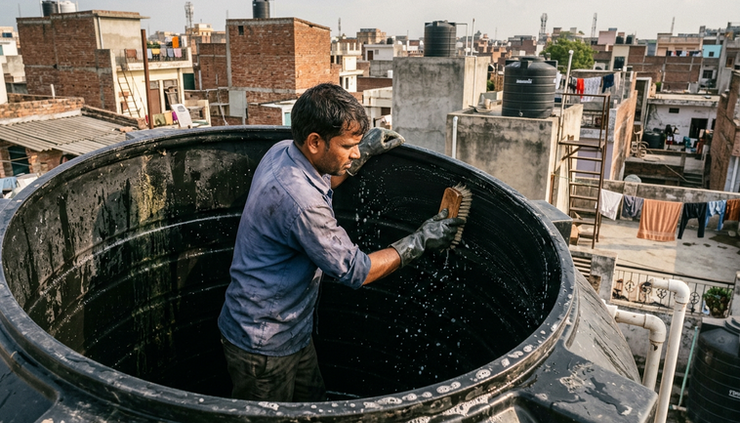
Once the tank is empty, the lower surface is cleaned. This is where most of the dirt collects. Sediment, mud, dead insects, algae patches, and slimy deposits are removed from the base and corners.
This stage is one of the main reasons to hire professionals. The bottom layer may look like ordinary mud, but if left untouched, it keeps mixing with fresh water.
Walls and corners are scrubbed
The inner walls are then scrubbed to remove slime and stains. Corners, joints, and pipe openings need extra attention because dirt can remain trapped there.
For plastic tanks, the cleaning method must be firm enough to remove dirt but gentle enough to prevent scratches or damage. For cement or underground tanks, the approach may be different because the surface is rougher and can hold more deposits.
The tank is washed and disinfected
After scrubbing, the tank is rinsed thoroughly. The dirty wash water is removed so that it does not enter the outlet line.
A disinfectant step may be used to reduce germs and improve hygiene. This is done with care because the tank must be safe for regular water storage after the process. The team should rinse and finish the tank properly before it is refilled.
Final check is done before use
Once cleaning is complete, the tank is checked again. The lid is placed properly, the outlet area is checked, and the tank is prepared for refilling.
A good cleaning visit does not end with wet walls. It ends when the tank is ready to receive water again.
Common signs your water tank needs cleaning
Some tanks need cleaning even if the scheduled date has not arrived. Watch for changes in water quality, plumbing performance, and tank condition.
Sign | What it may mean |
Water smells stale | Organic matter, algae, or stagnant deposits may be present |
Water looks cloudy | Sediment may be mixing with stored water |
Black or green patches inside the tank | Algae or slime may be growing on the inner surface |
Low flow from taps | Dirt may be blocking strainers or outlet points |
Frequent RO filter clogging | Stored water may contain extra suspended particles |
Stains on buckets and fittings | Sediment or rust particles may be present |
Insects near the tank opening | The lid or access cover may not be sealed well |
These signs do not always mean the water is unsafe, but they do mean the tank needs attention. Cleaning early helps prevent bigger plumbing and hygiene problems later.
Why choose Rays Deep Cleaning for tanks in Rajajipuram
A water tank is not a showpiece item. It is a basic utility that affects the daily life of every person using the building. That is why the cleaning service should be reliable, careful, and easy to schedule.
Rays Deep Cleaning brings a local service approach to homes and commercial properties in and around Rajajipuram. Instead of treating tank cleaning as a casual labour job, the team focuses on process, hygiene, and proper finishing.
People looking for Rays deep cleaning services Lucknow often need more than surface-level cleaning. With water tanks, the quality of work matters because mistakes are not always visible right away.
Local knowledge helps with practical planning
Rajajipuram has many older houses, narrow lanes, compact rooftops, and mixed-use buildings. Some tanks are placed on high terraces. Some underground tanks sit near parking zones. Some homes have more than one tank connected to different supply lines.
A local team understands these practical issues. They can plan access, drainage, timing, and cleaning steps more smoothly.
The service saves time and effort
Cleaning a tank without proper tools can take a long time. It can also leave a mess around the roof or courtyard. A professional team reduces the effort for the property owner and finishes the job in a more organised way.
This is especially helpful for:
Joint families with high water use
Rental homes and independent floors
Apartment blocks and small societies
Shops and food-related businesses
Clinics, salons, and coaching centres
Homes with elderly people or children
Better cleaning supports better maintenance
A clean tank also helps protect plumbing fixtures. Sediment can collect in taps, shower heads, flush tanks, and washing machine filters. RO purifiers may need more frequent service if the storage tank contains too much suspended dirt.
Routine tank cleaning does not replace water purification where needed, but it supports the whole water system. Clean storage is the first step before filtration, boiling, or any other treatment.
How often should a water tank be cleaned
There is no single rule that suits every building. The right cleaning schedule depends on water source, tank type, usage, and surroundings.
For most residential properties, cleaning every few months is a sensible practice. If the tank receives municipal water, borewell water, tanker supply, or mixed sources at different times, deposits may build up faster.
A tank may need more frequent cleaning when:
There is construction work nearby
The lid does not close tightly
The water source changes often
The tank is exposed to strong sunlight
The building has high daily water use
The plumbing lines are old
The tank has not been cleaned for a long time
Seasonal timing also matters. Many households prefer cleaning before peak summer because water use rises. Cleaning before the monsoon can also help if the tank area is exposed to dust, leaves, and rainwater splash.
Simple steps to keep your tank cleaner after service
Professional cleaning gives the tank a fresh start. A few habits help keep it cleaner for longer.
Keep the lid closed properly
A loose lid invites dust, insects, leaves, and small debris. After every inspection, check that the lid sits firmly. If it is cracked or broken, replace it instead of covering the tank with temporary plastic sheets or stones.
Avoid unnecessary opening
Every time the tank is opened, dust can enter. Open it only when needed for inspection, repair, or cleaning.
Trim nearby branches
Leaves and bird droppings can fall near rooftop tanks. If branches touch or hang over the tank, trim them safely.
Check overflow and vent areas
Openings should allow function without letting pests enter. If the overflow pipe is damaged or uncovered, it can become an entry point for insects.
Watch the water after plumbing work
If repair work happens in the building’s pipeline, check the tank and taps after supply resumes. Pipe disturbance can release rust, mud, or trapped deposits.
Book cleaning before the tank becomes visibly dirty
Waiting for bad smell or muddy water is not ideal. A planned cleaning schedule is easier, cleaner, and less stressful.

What to expect during a booking
A smooth water tank cleaning service starts with clear information. Before booking, be ready to share a few details.
Useful details include:
Number of tanks
Approximate tank capacity
Tank location, such as rooftop or underground
Type of tank, such as plastic, cement, or concrete
Current condition, if known
Access details, such as ladder, terrace entry, or parking area
Preferred time slot
Before the team arrives, use stored water where possible so the tank level is low. Keep the access route clear. If the tank is on a rooftop, make sure the terrace door is open and movable items are kept aside.
During the visit, keep children and pets away from the cleaning area. Wet surfaces can be slippery. After cleaning, allow the tank to refill and check the first flow from taps if advised by the team.
Clean water storage starts with the tank
A water purifier can clean water at one point. A clean glass can make water pleasant to drink. But if the storage tank is neglected, dirt keeps entering the system before water reaches any tap or filter.
That is why tank cleaning deserves regular attention.
Professional water tank cleaning in Rajajipuram by Rays Deep Cleaning gives homes and commercial spaces a practical way to maintain hygiene, protect plumbing, and avoid the unpleasant surprise of dirty stored water. The work is simple to schedule, but the benefit reaches every tap in the building.
Make tank cleaning part of routine home maintenance, not an emergency response. Clean storage is one of the simplest ways to support cleaner daily water use.

Comments